If you’ve ever shopped for a Bluetooth speaker, wireless earbuds, or outdoor headphones, you’ve almost certainly seen the label “IPX6” somewhere in the product specs. But what does IPX6 waterproof actually mean? Is it safe to take your speaker in the shower? Can it survive a rainstorm? Will dropping it in a puddle ruin it?
These are fair questions, and the answers matter more than most product listings let on. Understanding IPX6 gives you real, practical information about how to use and protect your audio gear.
Key Takeaways
- IPX6 is part of the IP (Ingress Protection) rating system, which defines how well a device resists water and dust
- The “X” in IPX6 means the device has not been rated for dust resistance, only water
- The “6” indicates protection against powerful water jets from any direction
- IPX6 does not mean the device is waterproof in the traditional sense, it is water-resistant under specific conditions
- IPX6 devices can handle heavy rain, splashes, and water jets, but are not designed for submersion
- Higher ratings like IPX7 and IPX8 offer submersion protection that IPX6 does not
- Always check the full IP rating, not just the marketing language, before buying water-resistant audio gear
What Is the IP Rating System?
The IP rating system stands for Ingress Protection and is defined by the international standard IEC 60529. It’s a standardized way to communicate how resistant an electronic device is to solids (like dust) and liquids (like water).
An IP rating always consists of two characters after the letters “IP”:
- First digit (0-6): Solid particle protection (dust, dirt, debris)
- Second digit (0-9K): Liquid ingress protection (water, moisture)
When you see an “X” in place of one of these digits, it simply means that particular category was not tested or rated. So IPX6 tells you nothing about dust protection, only that the device has been tested against water.
Breaking Down the IPX6 Rating
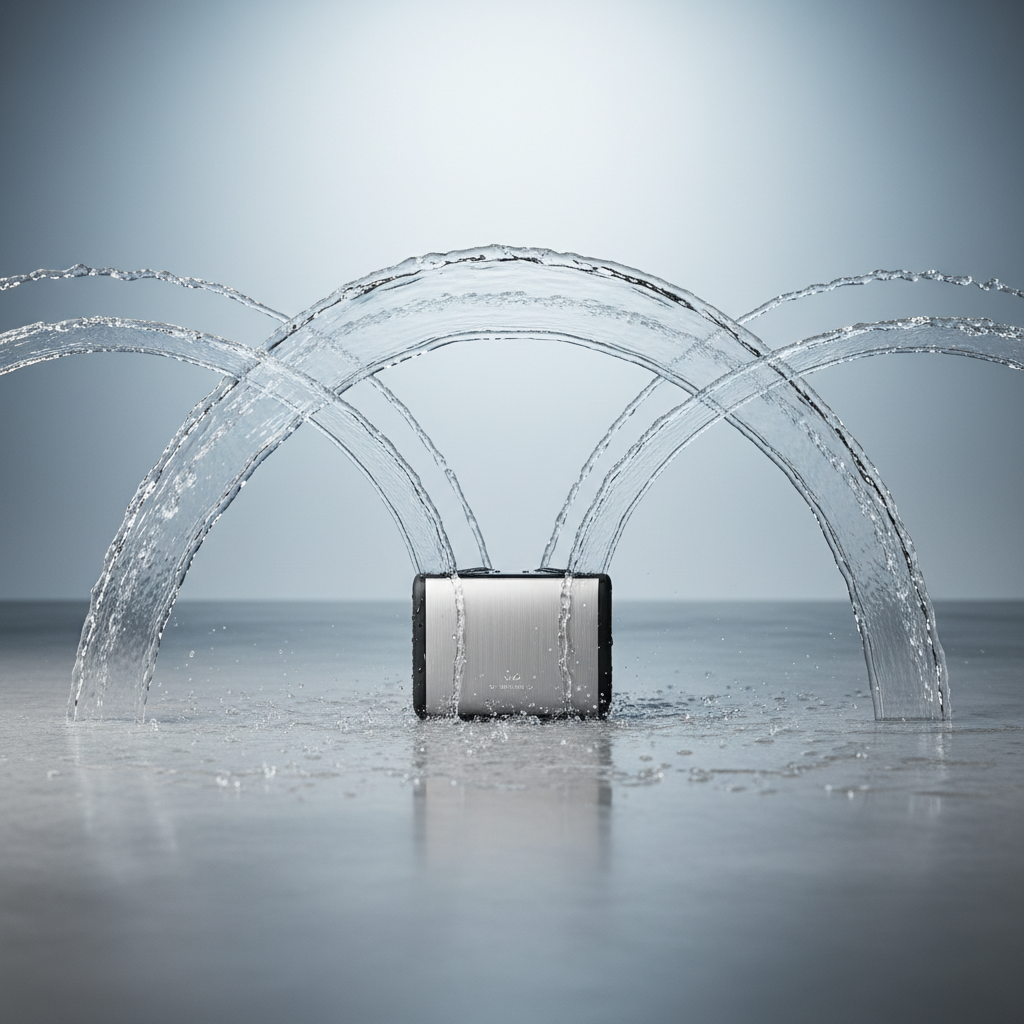
The number 6 in the water protection scale means the device can withstand powerful water jets. Specifically, the IEC standard defines this as:
- Water projected in powerful jets (12.5 liters per minute at 100 kPa)
- From any direction
- For a minimum of 3 minutes
- At a distance of 2.5 to 3 meters
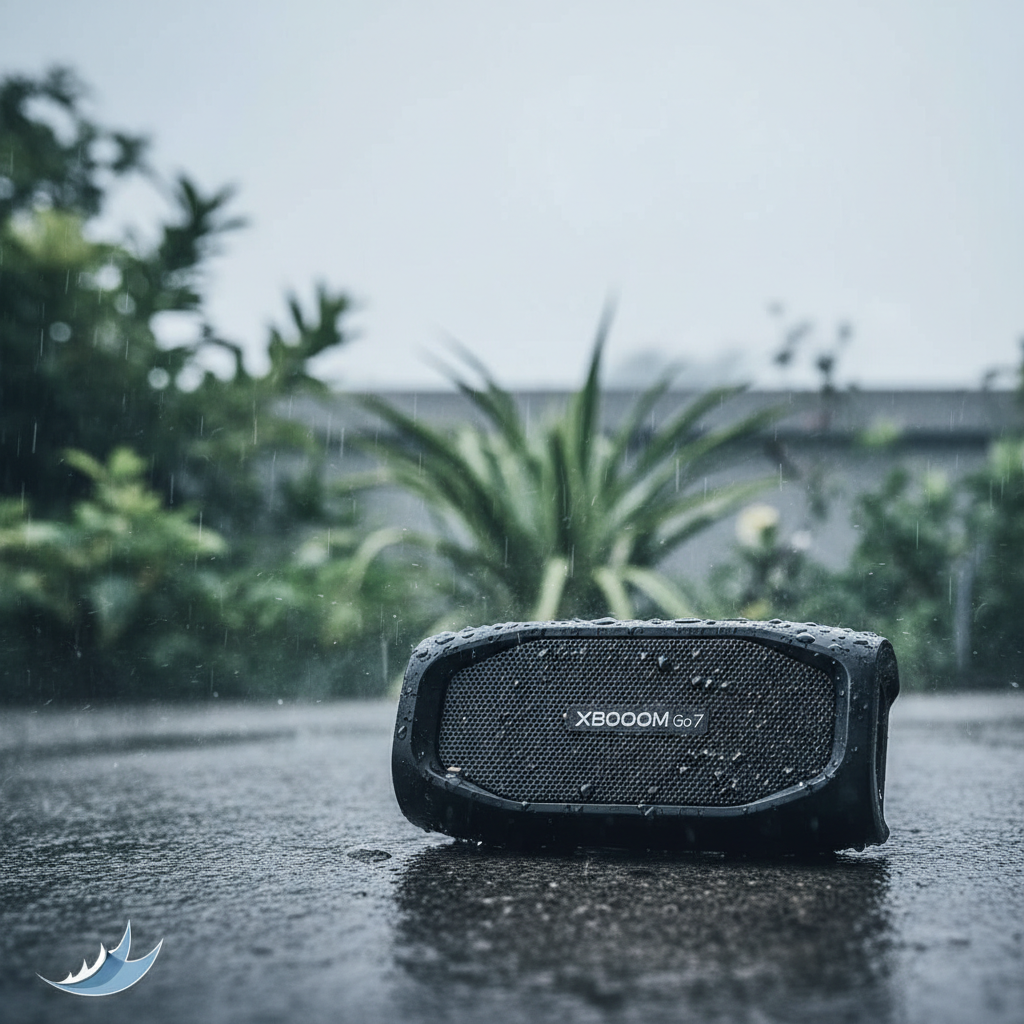
In practical terms, this means your IPX6-rated speaker or headphones can handle being caught in a heavy rainstorm, splashed aggressively at the pool, or even hit with a direct stream from a garden hose. That’s meaningful protection for outdoor use.
IPX6 vs. Other Water Resistance Ratings
To put IPX6 in proper context, it helps to see how it compares to the full water resistance scale. The table below outlines what each rating level actually means.
| Rating | Protection Level | Practical Example |
|---|---|---|
| IPX0 | No protection | Indoor-only devices |
| IPX1 | Dripping water (vertical) | Light rain at an angle |
| IPX2 | Dripping water (15° tilt) | Slight rain while tilted |
| IPX3 | Spraying water | Light rain from any angle |
| IPX4 | Splashing water | Splashes from any direction |
| IPX5 | Water jets (low pressure) | Light hose spray |
| IPX6 | Powerful water jets | Heavy rain, hose jets |
| IPX7 | Submersion up to 1 meter (30 min) | Dropped in a pool |
| IPX8 | Submersion beyond 1 meter | Deeper underwater use |
The jump from IPX5 to IPX6 is significant. IPX6 can handle a direct, forceful stream of water, not just incidental splashing. However, the jump from IPX6 to IPX7 is where submersion capability enters the picture, which is a meaningful distinction.
What IPX6 Does NOT Protect Against
This is where a lot of people get tripped up. The word “waterproof” gets used loosely in marketing, and IPX6 is not truly waterproof in the way most people imagine.
IPX6 does not protect against:
- Submersion in water, even briefly
- Being dropped into a sink, pool, or bathtub
- Extended exposure to moisture over time
- High-pressure water jets (that’s IPX9K territory)
- Dust, sand, or debris (no dust rating is assigned)
If you’re planning to use your speaker at the beach, an IPX6 rating means you need to be careful about sand and fine particles getting into the ports, since there’s no dust protection certified. For truly rugged outdoor adventures, a full IP67 or IP68 rating is a more complete solution.
IPX6 in Audio Gear: What It Means for Speakers and Headphones
For portable Bluetooth speakers and headphones, IPX6 is actually a very practical and common rating. It covers most real-world outdoor scenarios without adding the bulk or cost that comes with higher submersion ratings.
Bluetooth Speakers
An IPX6 Bluetooth speaker is well-suited for:
- Poolside use (as long as it doesn’t fall in)
- Beach trips (though watch for sand)
- Hiking and camping in wet conditions
- Outdoor parties where drinks might get spilled
- Shower use, provided the speaker isn’t directly under the showerhead for extended periods
If you’re exploring options for outdoor audio, it’s worth understanding what features matter most. Our guide on what a tailgating speaker means and what to look for covers how durability ratings factor into choosing the right speaker for outdoor events.
Earbuds and In-Ear Monitors
IPX6 earbuds are popular for workouts and outdoor runs because they can handle heavy sweat and rain without issue. However, they shouldn’t be worn swimming. If you’re comparing earbuds and in-ear monitors for active use, understanding the difference between these product categories is helpful. Check out earbuds vs. in-ear monitors: what’s the difference for a deeper breakdown of the two.
Headphones
Over-ear headphones with IPX6 ratings are less common because the larger form factor makes sealing more complex. When they do appear, they’re typically designed for outdoor or sport use. If you’re shopping for over-ear options, our roundup of best over-ear headphones under $200 includes models with varying levels of weather resistance.
How IPX6 Testing Actually Works
Understanding the testing process adds useful context to what the rating guarantees.
Manufacturers submit their devices to third-party labs where trained technicians use calibrated equipment to simulate the defined water conditions. For IPX6, this means a nozzle with a 12.5mm internal diameter delivering water at a specific pressure and flow rate, aimed at the device from multiple angles.
Important caveats about IP testing:
- Testing is done on new devices, not after wear and tear
- Seals and gaskets degrade over time, reducing real-world protection
- Exposure to chlorinated or saltwater can accelerate seal degradation
- Drops and physical damage can compromise waterproofing even if the IP rating remains on the label
- Manufacturers self-certify in some cases, so the rigor of testing can vary
This is why treating any water resistance rating as a guideline rather than an absolute guarantee is always the smarter approach.
A Practical Comparison: IPX6 vs. IP67
Many buyers find themselves choosing between IPX6 and IP67 devices. Here’s a direct comparison to clarify the real-world differences.
| Feature | IPX6 | IP67 |
|---|---|---|
| Dust Protection | Not rated | Fully dust-tight |
| Water Jet Resistance | Yes (powerful jets) | Yes |
| Submersion (1m/30min) | No | Yes |
| Best For | Rain, splashes, sweat | Beach, pool, dusty environments |
| Typical Use Case | Outdoor speakers, sport earbuds | Rugged adventure gear |
| Price Premium | Lower | Higher |
For most casual outdoor users, IPX6 is more than sufficient. For more demanding environments, IP67 or IP68 provides a meaningful upgrade in protection.
Tips for Maintaining Water Resistance Over Time
Even a well-rated device needs some care to maintain its protection level:
- Rinse with fresh water after saltwater or chlorine exposure
- Dry ports thoroughly before charging to prevent corrosion
- Avoid charging in wet conditions even if the device itself is rated for moisture
- Inspect seals periodically for cracks or wear, especially on removable covers
- Store properly when not in use, away from extreme heat that can degrade gaskets
Conclusion
IPX6 is a meaningful and useful water resistance rating that covers the vast majority of outdoor and active-use scenarios. It means your device can handle powerful water jets, heavy rain, sweat, and aggressive splashing without damage. What it doesn’t mean is that your device can be submerged or used in dusty environments without risk.
When shopping for audio gear, look past the marketing buzzwords and check the actual IP rating. A device labeled “waterproof” with only an IPX4 rating tells a very different story than one with a genuine IPX6 or IP67 certification. Knowing the difference helps you choose gear that actually fits how you plan to use it.
Frequently Asked Questions
Can I use an IPX6 speaker in the shower?
Generally yes, as long as the speaker isn’t sitting directly under a constant stream of water for extended periods. IPX6 handles powerful jets briefly, but prolonged direct water exposure is outside its tested range.
Is IPX6 good enough for swimming?
No. IPX6 does not cover submersion. For swimming, you need at least an IPX7 rating, which certifies protection up to 1 meter for 30 minutes.
Does IPX6 mean the device is dustproof?
No. The “X” in IPX6 means dust resistance was not tested or rated. If dust protection matters to you, look for a full IP rating like IP65 or IP67.
How long does IPX6 water resistance last?
The rating reflects performance when the device is new. Over time, seals degrade, especially with saltwater, chlorine, or physical wear. Most manufacturers recommend re-evaluating protection after a year or two of heavy use.
What is the difference between IPX6 and IPX7?
IPX6 protects against powerful water jets but not submersion. IPX7 adds the ability to be submerged in up to 1 meter of water for 30 minutes. If there’s any chance your device will end up underwater, IPX7 is the safer choice.