Floor standing speakers, also called tower speakers, are the gold standard for home audio. They’re large, they’re capable, and when matched well with the right room and equipment, they deliver a listening experience that smaller speakers simply can’t match. But with so many options across wildly different price ranges, understanding what actually separates a great floor standing speaker from a mediocre one is more valuable than any list of product recommendations.
This guide breaks down everything you need to know to make a smart, informed decision about the best floor standing speakers for your specific needs.
Key Takeaways
- Floor standing speakers excel at full-range audio reproduction, often eliminating the need for a separate subwoofer
- Sensitivity rating matters as much as power handling when matching speakers to an amplifier
- Room size and placement significantly affect how a tower speaker performs
- Driver configuration (number and type of drivers) directlystage and frequency response
- Bi-wiring and bi-amping options can improve performance on compatible models
- Budget tiers differ substantially in build quality, materials, and crossover design
- Listening to speakers before buying, even at a showroom, is still the most reliable test Makes Floor Standing Speakers Different
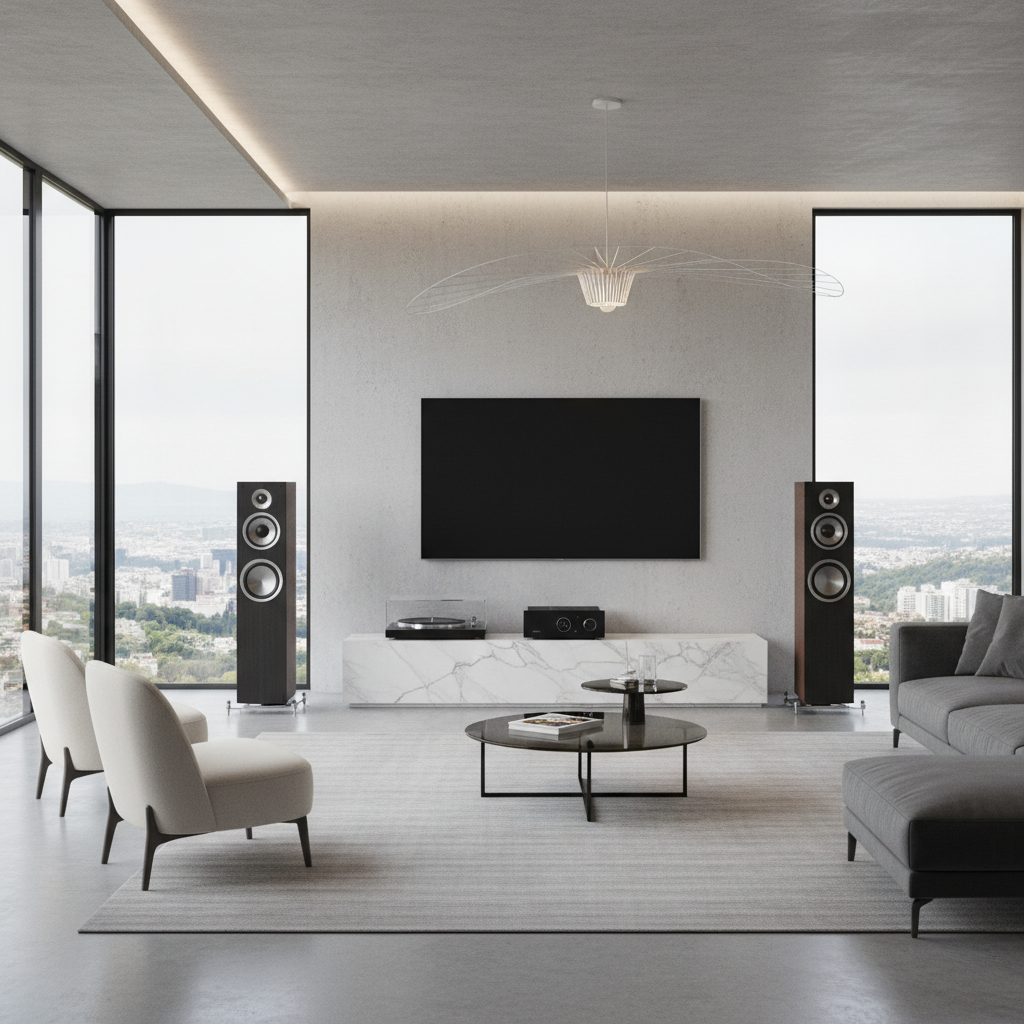
Tower speakers are designed to stand independently on the floor, typically ranging from 36 to 50 inches tall. Unlike bookshelf speakers, they house multiple drivers in a single cabinet, which allows them to reproduce a wider frequency range without relying on external subwoofers.
The key advantage is scale. A well-designed tower speaker can fill a large room with sound that feels natural and three-dimensional. The bass response is deeper, the dynamics are more effortless, and the overall presentation tends to be more immersive.
That said, bigger isn’t always better. A large tower speaker in a small room can cause bass buildup and muddiness. Matching speaker size to room dimensions is one of the most overlooked factors in home audio.
Understanding the Specs
Before comparing models, it helps to understand the specifications matter.
Sensitivity
Sensitivity is measured in decibels (dB) at one watt, one meter. A speaker rated at 90 dB is significantly easier to drive than one rated at 85 dB. If you’re pa with a lower-powered amplifier, sensitivity becomes critical. Higher sensitivity means more volume from less power.
Impedance
Most floor standing speakers are rated at 4, 6, or 8 ohms. Lower impedance draws more current from an amplifier. An 8-ohm speaker is generally safest match for most receivers, while 4-ohm speakers may require a more capable amplifier. If you’re curious how impedance affects sound, the relationship between ohm ratings and audio quality is worth understanding before you commit to a purchase.
Frequency Response
This tells you the range of frequencies a speaker can reproduce, typically listed as something like 35 Hz to 20 kHz. The lower the bass extension, the more low-end the speaker can handle on its own. A speaker that reaches down to 30 Hz will handle bass-heavy music and film soundtracks without needing a subwoofer.
Driver Configuration
Tower speakers typically use two to four drivers per cabinet. A common configuration includes a tweeter for highs, a midrange driver for vocals and instruments, and one or two woofers for bass. More drivers don’t automatically mean better sound, but they do allow for better frequency division and less distortion at higher volumes.
Budget Tiers: What to Expect at Each Level
| Price Range | What You Get |
|---|---|
| Under $500/pair | Entry-level build, basic crossovers, decent sound for casual listening |
| $500 to $1,500/pair | Improved driver materials, better cabinetry, more accurate frequency response |
| $1,500 to $5,000/pair | High-quality crossover components, premium driver materials, refined soundstage |
| $5,000+/pair | Reference-grade performance, audiophile-level detail, often hand-assembled |
For most listeners setting up a living room or dedicated listening space, the $500 to $1,500 range offers the best balance of performance and value. Spending more delivers diminishing returns unless you have a well-treated room and high-quality source components to justify it.
Room Placement and Acoustic Considerations
Even the best floor standing speakers will underperform in a poorly configured room. Here are the key placement principles to follow:
- Distance from the back wall: Pull speakers at least 12 to 18 inches from the rear wall to reduce bass buildup
- Toe-in angle: Pointing speakers slightly toward the listening position improves stereo imaging and focus
- Symmetry: Both speakers should be equidistant from the side walls to maintain a balanced soundstage
- Listening distance: A general rule is that listening distance should be roughly 1.5 times the distance between the speakers floors and reflective surfaces can make treble sound harsh. Adding rugs, bookshelves, or acoustic panels helps tame reflections and improves overall clarity. This is especially important with speakers that have a pronounced high-frequency response.
Key Features to Compare When Shopping
| Feature | Why It Matters |
|---|---|
| Cabinet material andacing | Reduces resonance and coloration |
| Crossover quality | Determines how cleanly frequencies are divided between drivers |
| Tweeter type (dome, ribbon, AMT) | Affects detail and high-frequency smoothness |
| Bass port design (ported vs. sealed) | Ported extends bass, sealed is tighter and more controlled |
| Bi-wire/bi-amp terminals | Allows for separate amplification of high and low frequencies |
Understanding crossover design is particularly useful. A well-engineered crossover ensures that each driver only handles the frequencies it was designed for, which reduces distortion and improves coherence. Budget speakers often cut corners here, which is one reason mid-range models tend to sound more natural. If you’re also running an amplifier and want to understand how power interacts with speaker performance, it’s worth reading about whether speakers actually sound better with more power.
Matching Floor Standing Speakers to an Amplifier
Tower speakers need a capable amplifier to perform at their best. A receiver or integrated amp with at least 50 to 100 watts per channel is a reasonable starting point for most 8-ohm floor standers. For 4-ohm models or speakers with lower sensitivity, you’ll want more headroom.
Some audiophiles choose separate preamplifiers and power amplifiers for better control and lower noise floors. If you’re exploring dedicated headphone or speaker amplification, understanding how to choose the right headphone amp can help you think through amplifier selection more broadly, since many of the same principles apply.
The number of speakers you’re connecting also matters. If you’re building a multi-speaker setup, understanding how many speakers can be connected to an amplifier will help you avoid overloading your equipment.
Common Mistakes to Avoid
- Buying based on specs alone. Frequency response numbers and sensitivity ratings tell part of the story, but they don’t capture how a speaker actually sounds in a real room.
- Ignoring the amplifier match. A great speaker paired with an underpowered or mismatched amp will never reach its potential.
- Skipping room treatment. Even modest acoustic improvements can make a larger difference than upgraOverlooking the tweeter.** The tweeter handles everything you hear clearly. A harsh or recessed tweeter will color every recording you play. Understanding tweeters do in an audio system helps you evaluate this more critically.
- Chasing brand names over sound quality. Well-known brands make excellent speakers, but lesser-known manufacturers often offer better value at the same price point.
What Type of Listener Are You?
Floor standing speakers serve different purposes depending on how you listen:
- Music listeners should prioritize midrange clarity, imaging, and low distortion at moderate volumes
- Home theater enthusiasts should look for dynamic range, efficient bass extension, and compatibility with a center channel and surround system
- Audiophiles will want to focus on driverover design, and cabinet resonance control
- Casual listeners may find that a well-chosen entry-level tower speaker exceeds expectations without the need for premium investment
Conclusion
Choosing the best floor standing speakers comes down to matching the right speaker to your room, your amplifier, and your listening habits. The specs matter, but they’re a starting point, not a finish line. Understanding sensitivity, impedance, driver configuration, and room placement gives you the tools to evaluate any speaker on its actual merits.
Spend time listening before you buy when possible. Trust your ears over marketing language. And remember that a well-placed, properly amplified mid-range tower speaker will almost always outperform an expensive one that’s been poorly set up.
The fundamentals of good audio don’t change. The best floor standing speakers are the ones that disappear into the music and let you focus entirely on the sound.
Frequently Asked Questions
Do floor standing speakers need a subwoofer?
Most quality floor standing speakers extend low enough in frequency to handle bass without a dedicated subwoofer. However, for home theater applications or if you listen to bass-heavy music at high volumes, adding a subwoofer can fill the lowest octaves more should I spend on floor standing speakers?**
For most listeners, spending between $500 and $1,500 per pair delivers a significant improvement over entry-level options without hitting the point of diminishing returns. Higher budgets make sense when paired with equally capable source components and amplification.
Can I use floor standing speakers in a small room?
You can, but it requires careful placement and possibly some room treatment. Large tower speakers in small rooms can produce excessive bass buildup. Sealed cabinet designs tend to work better in smaller spaces than ported designs.
What is bi-wiring and does it actually help?
Bi-wiring involves running separate cables from your amplifier to the high and low frequency terminals on a speaker. The audible benefit is debated, but it can reduce interference between driver sections on some speaker designs.
How long do floor standing speakers last?
With proper care, quality floor standing speakers can last 20 to 30 years or more. The most common points of failure are foam surrounds on woofers, which can be replaced, and crossover capacitors, which may degrade over time but are also serviceable.