If you’ve been shopping for headphones beyond the entry level, you’ve likely come across two terms: planar magnetic and dynamic driver. Understanding the difference between these two technologies can help you make a smarter buying decision, whether you’re a casual listener or an audio enthusiast chasing the best possible sound.
Both driver types convert electrical signals into sound, but they do it in fundamentally different ways. Those differences affect how the headphones sound, how they feel to wear, and how much power they need to perform at their best.
Quick Answer
Planar magnetic headphones use a thin membrane suspended between magnets to produce sound, while dynamic driver headphones use a voice coil and cone. Planar magnetic drivers tend to offer lower distortion and more even sound reproduction, while dynamic drivers are more, more affordable, and easier to drive with standard devices.
Key Takeaways
- Dynamic drivers are the most common headphone technology, found in everything from budget earbuds to premium over-ear headphones
- Planar magnetic drivers use a different physical mechanism that spreads sound production across a larger surface area
- Planar magnetic headphones generally require more power and often benefit from a dedicated headphone amplifier
- Dynamic driver headphones are more portable-friendly and work well with smartphones and laptops
- Planar magnetic headphones are often preferred by audiophiles for their low distortion and detailed sound
- Both technologies can produce excellent sound, and the right choice depends on your listening habits and gear
How Do Dynamic Driver Headphones Work?
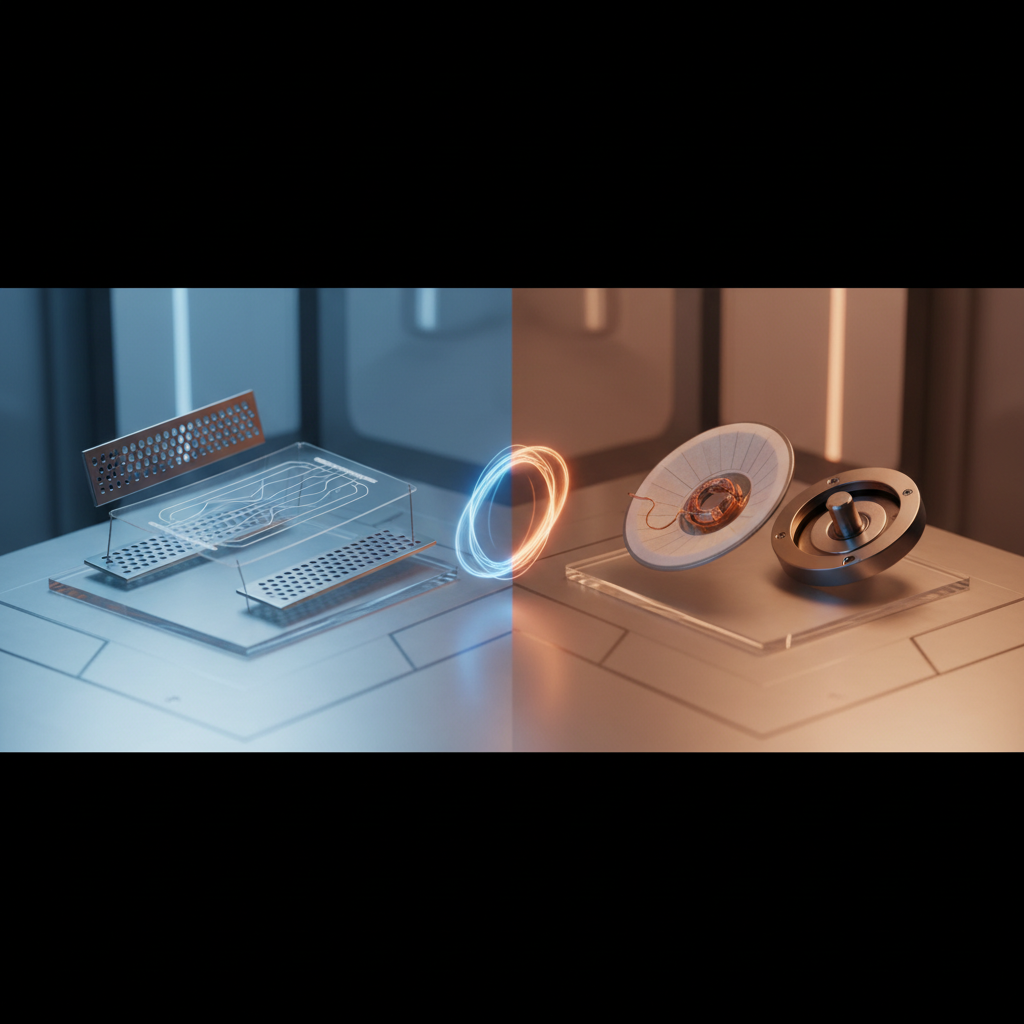
Dynamic drivers work similarly to traditional loudspeakers. A voice coil attached to a diaphragm sits within a magnetic field. When an electrical signal passes through the coil, it creates movement that pushes and pulls the diaphragm, which generates sound waves.
This is the technology behind the vast majority of headphones on the market. It’s well understood, cost-effective to manufacture, and capable of producing powerful bass response. Dynamic drivers can generate a lot of air movement, which contributes to that full, punchy low-end many listeners enjoy.
Strengths of Dynamic Drivers
- Wide availability across all price ranges
- Strong, impactful bass response
- Efficient power usage, works easily with phones and laptops
- Durable and well-tested technology
- Broad selection of form factors, including earbuds and over-ear styles
How Do Planar Magnetic Headphones Work?
Planar magnetic drivers take a different approach. Instead of a cone and voice coil, they use a very thin, flat membrane with embedded conductor traces printed across its surface. This membrane is suspended between two arrays of magnets. When current flows through the traces, the entire membrane moves uniformly to produce sound.
Because the driving force is distributed across the whole surface rather than concentrated at a single point, planar magnetic drivers tend to produce lower distortion, especially at higher volumes. The sound is often described as more accurate and more consistent across the frequency range.
Strengths of Planar Magnetic Headphones
- Lower distortion across the frequency range
- More uniform diaphragm movement for cleaner sound
- Excellent detail retrieval, particularly in the midrange and treble
- Generally faster transient response, meaning they handle quick passages with precision
- Favored in audiophile and studio listening contexts
Key Differences: A Side-by-Side Comparison
| Feature | Dynamic Driver | Planar Magnetic |
|---|---|---|
| Driver mechanism | Voice coil and cone | Thin membrane with conductor traces |
| Distortion levels | Higher at loud volumes | Generally lower |
| Power requirements | Low, works with most devices | Higher, often needs an amp |
| Bass character | Punchy and impactful | Tight and controlled |
| Typical price range | Budget to premium | Mid-range to high-end |
| Weight | Lighter on average | Often heavier |
| Portability | High | Lower |
Do Planar Magnetic Headphones Need an Amplifier?
This is one of the most practical questions to consider. Most planar magnetic headphones have lower sensitivity ratings higher power requirements than dynamic driver headphones. Running them from a smartphone or laptop often results in lower volume and reduced performance.
If you’re considering planar magnetic headphones, pairing them with a quality headphone amplifier will help you get the most out of them. This is an added cost worth factoring into your budget.
Which One Sounds Better?
Neither technology is objectively superior across the board. Sound preference is personal, and both can sound excellent when well implemented.
Planar magnetic headphones tend to appeal to listeners who prioritize accuracy, low distortion, and a more analytical listening experience. Dynamic driver headphones appeal to listeners who want engaging bass, portability, and broad compatibility with everyday devices.
If you’re exploring audiophile-grade headphones and want to understand how these technologies perform in real products, reviewing specific models can help you hear the differences in practice.
Who Should Choose Which?
Choose dynamic driver headphones if you:
- Listen primarily on a smartphone or laptop
- Want portability and ease of use
- Prefer a more bass-forward sound signature
- Are working with a tighter budget
Choose planar magnetic headphones if you:
- Have or plan to buy a headphone amplifier
- Prioritize low distortion and precise sound reproduction
- Listen at a dedicated desk setup rather than on the go
- Are willing to invest more in the listening experience
For anyone building a home listening setup and comparing options, looking at the best over-ear headphones under $200 can help you understand where each technology fits within real-world budgets.
Conclusion
Planar magnetic and dynamic driver headphones both have clear strengths, and neither is a universal winner. Dynamic drivers offer convenience, affordability, and punchy sound. Planar magnetic drivers offer precision, lower distortion, and a more refined listening experience at the cost of portability and power requirements.
Understanding how each technology works helps you match your headphones to your actual listening habits, your gear, and your expectations for sound quality.
FAQs
Are planar magnetic headphones worth it for casual listeners?
For casual listeners who use a smartphone or laptop as their primary source, planar magnetic headphones are often overkill. They require more power and typically cost more, making dynamic driver headphones a more practical choice for everyday use.
Do dynamic driver headphones have more bass than planar magnetic?
Dynamic drivers often produce bass that feels more impactful and punchy, while planar magnetic headphones tend to deliver tighter, more controlled bass. Neither is strictly better, as it depends on the listener’s preference for bass character.
Can you use planar magnetic headphones without an amp?
You can, but most planar magnetic headphones will underperform without adequate amplification. They typically require more power than a phone or laptop can cleanly provide, which limits volume and sound quality.
What does distortion mean in headphones?
Distortion in headphones refers to unwanted changes in the audio signal during playback. Lower distortion means the sound you hear more closely matches the original recording, which is one reason audiophiles often prefer planar magnetic designs.
Are there planar magnetic in-ear monitors?
Yes, planar magnetic technology has been adapted into in-ear monitor form factors in recent years. These are sometimes called planar IEMs and offer some of the same sonic characteristics as full-size planar magnetic headphones in a smaller package.