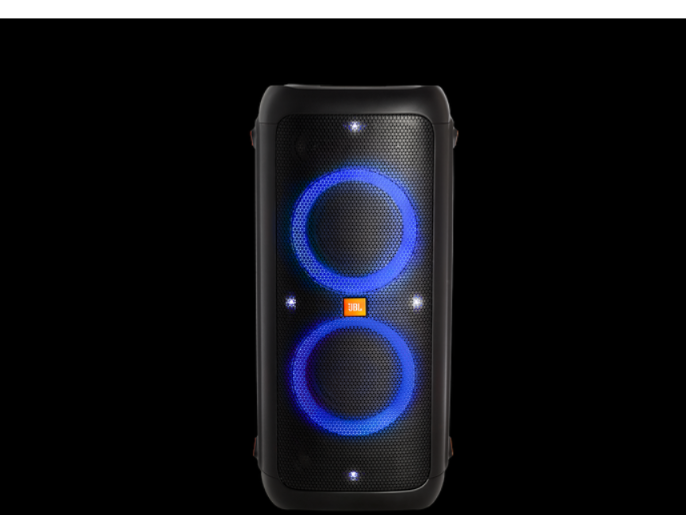
The JBL PartyBox 300 occupies an interesting space in the portable speaker market — it’s big enough to fill a room with sound, yet designed to be moved around. Whether you’re planning a backyard gathering, a beach day, or a basement party, this speaker promises serious output in a relatively portable package. But does it actually deliver? This review breaks down everything worth knowing about the PartyBox 300, from its sound performance and build quality to its features and real-world usability.
Key Takeaways
- The JBL PartyBox 300 delivers 240W of peak output, making it one of the louder options in its class
- It supports Bluetooth, USB, AUX, and guitar/microphone inputs, giving it genuine versatility
- Battery life is rated at approximately 18 hours, which holds up well in real-world use
- The built-in light show syncs to music and adds to the party atmosphere
- It’s not fully waterproof — only splash-resistant, so keep it away from heavy rain
- Sound quality is strong for a party speaker, though audiophiles may find the tuning V-shaped and bass-heavy
- At roughly 28 lbs, it’s portable but not lightweight — the telescoping handle and wheels help
- It competes directly with speakers like the Sony SRS-XP700 and the Ion Audio Total PA
Build Quality and Design
The PartyBox 300 has a no-nonsense aesthetic. It’s a tall, rectangular enclosure with a fabric grille, a built-in carry handle, and integrated wheels — essentially a small PA system in a consumer-friendly form factor. The chassis feels solid and well-constructed, with reinforced corners that suggest JBL built this with transport in mind.
The telescoping handle is a nice touch for rolling it across flat surfaces, though it’s less helpful on grass or uneven terrain. At around 28 lbs, you’ll feel it after a short carry, but it’s manageable for one person. The unit is IPX4 rated, meaning it can handle splashes and light rain, but it’s not submersible or suitable for being left out in a downpour.
The LED light panel on the front syncs to the beat of your music, cycling through colors and patterns. It’s genuinely fun, and you can customize it through the JBL PartyBox app. Whether you love or ignore this feature depends on your use case — it’s easy to turn off if you’re not into the visual element.
Controls and Interface
The top panel houses the main controls: power, volume, Bluetooth pairing, and input selection. They’re large, clearly labeled, and usable in low-light conditions. The JBL PartyBox app (available on iOS and Android) expands control options, including EQ adjustments, light customization, and the ability to link multiple PartyBox speakers together.
Sound Performance
This is where the PartyBox 300 earns its reputation. The speaker uses a woofer and tweeter configuration to cover the frequency range, and the result is a loud, energetic sound that performs well in outdoor and large indoor spaces.
Bass Response
Bass is the headline feature here. The PartyBox 300 produces deep, punchy low-end that you can feel in your chest at higher volumes. It handles bass-heavy genres like hip-hop, EDM, and reggaeton particularly well. The tuning leans toward the low end, which is appropriate for a party speaker but means it won’t suit listeners who prefer a flat or neutral sound signature.
If you’re curious about how speaker drivers contribute to different frequency ranges, understanding what tweeters do in an audio system can help frame how the PartyBox 300’s multi-driver design works together.
Midrange and Highs
Mids are present but slightly recessed compared to the bass, which is typical of consumer party speakers. Vocals come through clearly at moderate volumes but can get a bit lost in the mix at maximum output. Highs are crisp and detailed enough for the use case — you won’t mistake this for a studio monitor, but it handles treble without harshness.
Volume and Distortion
At 80% volume, the PartyBox 300 sounds excellent. Push it to 100% and you’ll notice some compression, particularly in the mids. For most gatherings, you’ll never need to max it out — the speaker is genuinely loud enough to fill a large backyard or a medium-sized indoor space without distortion becoming a major issue.
Features Breakdown
| Feature | Details |
|---|---|
| Peak Output | 240W |
| Battery Life | Up to 18 hours |
| Connectivity | Bluetooth 4.2, USB, AUX, Mic/Guitar Input |
| Water Resistance | IPX4 (splash-resistant) |
| Weight | ~28 lbs (12.7 kg) |
| App Support | JBL PartyBox App (iOS & Android) |
| Light Show | Yes, customizable via app |
| Speaker Pairing | Yes, via TWS or PartyBoost |
Connectivity Options
The PartyBox 300 goes beyond Bluetooth. It includes:
- USB port for playing audio directly from a flash drive
- 3.5mm AUX input for wired connections
- Microphone and guitar inputs — a significant differentiator from most Bluetooth speakers
- Bluetooth 4.2 for wireless streaming from phones and tablets
The mic and guitar inputs make this a legitimate option for small performances, karaoke nights, or acoustic sets in a backyard setting. It’s not a replacement for a dedicated PA system, but it bridges the gap in a way that most portable speakers simply don’t.
Battery Life
JBL rates the PartyBox 300 at 18 hours of battery life, and real-world testing generally confirms this at moderate volumes. Push the volume higher or keep the light show running continuously and you’ll see that number drop — expect closer to 12–14 hours at high output with lights on. That’s still impressive for a speaker this powerful.
Charging takes around 3.5 hours via the included power adapter. There’s no USB-C charging or pass-through charging for other devices, which is a minor limitation at this price point.
How It Compares to Similar Speakers
| Speaker | Peak Output | Battery Life | Weight | Water Rating | Mic Input |
|---|---|---|---|---|---|
| JBL PartyBox 300 | 240W | 18 hrs | 28 lbs | IPX4 | Yes |
| Sony SRS-XP700 | 180W | 25 hrs | 15.4 lbs | IP66 | Yes |
| JBL PartyBox 110 | 160W | 12 hrs | 16.5 lbs | IPX4 | Yes |
| Ion Audio Total PA | 100W | N/A (AC) | 21 lbs | None | Yes |
The Sony SRS-XP700 is the most direct competitor. It’s lighter, better waterproofed, and has longer battery life — but the PartyBox 300 edges it out on raw output and bass impact. If portability and water resistance are priorities, the Sony has an edge. If sheer volume and party-ready audio are the goal, the PartyBox 300 wins.
For those deciding between JBL models at different price points, it’s worth reading about the differences between JBL’s Flip series to understand how JBL scales features across its lineup.
Who Is the PartyBox 300 Best For?
The PartyBox 300 makes the most sense for:
- Party hosts who need reliable, loud audio for outdoor or indoor gatherings
- Casual performers who want to use a mic or guitar input without buying a full PA system
- People who value battery life and don’t want to be near an outlet all night
- Those who want a fun, visual element with the built-in light show
It’s less ideal for:
- Audiophiles who prioritize flat, neutral sound reproduction
- People who need full waterproofing for poolside or beach use
- Anyone looking for a truly compact, lightweight portable speaker
If you’re in the market for something more rugged and purpose-built for outdoor adventures, the Soundcore Boom 3i offers a different take on portable audio with a tougher build.
Practical Considerations
One thing worth noting: the PartyBox 300 runs on AC power when plugged in and switches to battery when unplugged. This is straightforward, but it means the speaker is at its best near an outlet when you want maximum performance over a long event. For outdoor use where outlets aren’t available, the battery handles the job well.
If you ever run into audio issues like popping or interference — common with high-powered speakers — understanding why speakers pop when turned on can help you troubleshoot without unnecessary concern.
Conclusion
The JBL PartyBox 300 does exactly what it sets out to do. It’s a powerful, feature-rich party speaker that delivers impressive volume, solid bass, and useful connectivity options — including mic and guitar inputs that most competitors skip. The 18-hour battery life is genuinely usable, and the build quality inspires confidence.
Its limitations are real but predictable: the sound tuning prioritizes impact over accuracy, the IPX4 rating limits true outdoor exposure, and the weight makes it less convenient than smaller alternatives. If you’re shopping for a speaker to power events and gatherings rather than critical listening sessions, the PartyBox 300 is a well-rounded, dependable choice that earns its place in JBL’s lineup.
Frequently Asked Questions
Can the JBL PartyBox 300 be used while charging?
Yes, the PartyBox 300 can operate while plugged into AC power. It functions as both a powered speaker and charges the internal battery simultaneously when connected to an outlet.
Does the JBL PartyBox 300 work with other PartyBox speakers?
Yes, JBL’s PartyBoost feature allows you to pair compatible PartyBox speakers together for a stereo or amplified setup. Check JBL’s compatibility list to confirm which models work together.
Is the JBL PartyBox 300 loud enough for outdoor use?
At 240W peak output, the PartyBox 300 handles medium to large outdoor spaces well. It’s suitable for backyard parties and gatherings of 30–50 people, though very large open spaces may require additional speakers.
How do I connect a microphone to the JBL PartyBox 300?
The PartyBox 300 has a dedicated microphone input (6.35mm jack). Plug in a compatible dynamic microphone, adjust the mic volume using the dedicated knob on the panel, and you’re ready to go.
Does the JBL PartyBox 300 have an equalizer?
Basic EQ adjustments are available through the JBL PartyBox app, including bass and treble controls. The speaker itself doesn’t have dedicated EQ buttons on the unit, so the app is the primary way to tune the sound.