If you’ve ever shopped for a Bluetooth speaker, wireless earbuds, or any portable audio gear, you’ve likely seen the label “IPX7.” But what does actually mean, and how well does it protect your device in real-world conditions? Understanding the IPX7 waterproof rating helps you make smarter buying decisions and avoid damaging expensive gear.
The rating system is a global standard set by the International Electrotechnical Commission (IEC). It defines how well a device resists solid particles and liquids. The “X” in IPX7 means hasn’t been rated for dust resistance, while the “7” refers to a specific level of water protection.
Quick Answer: What Is IPX7?
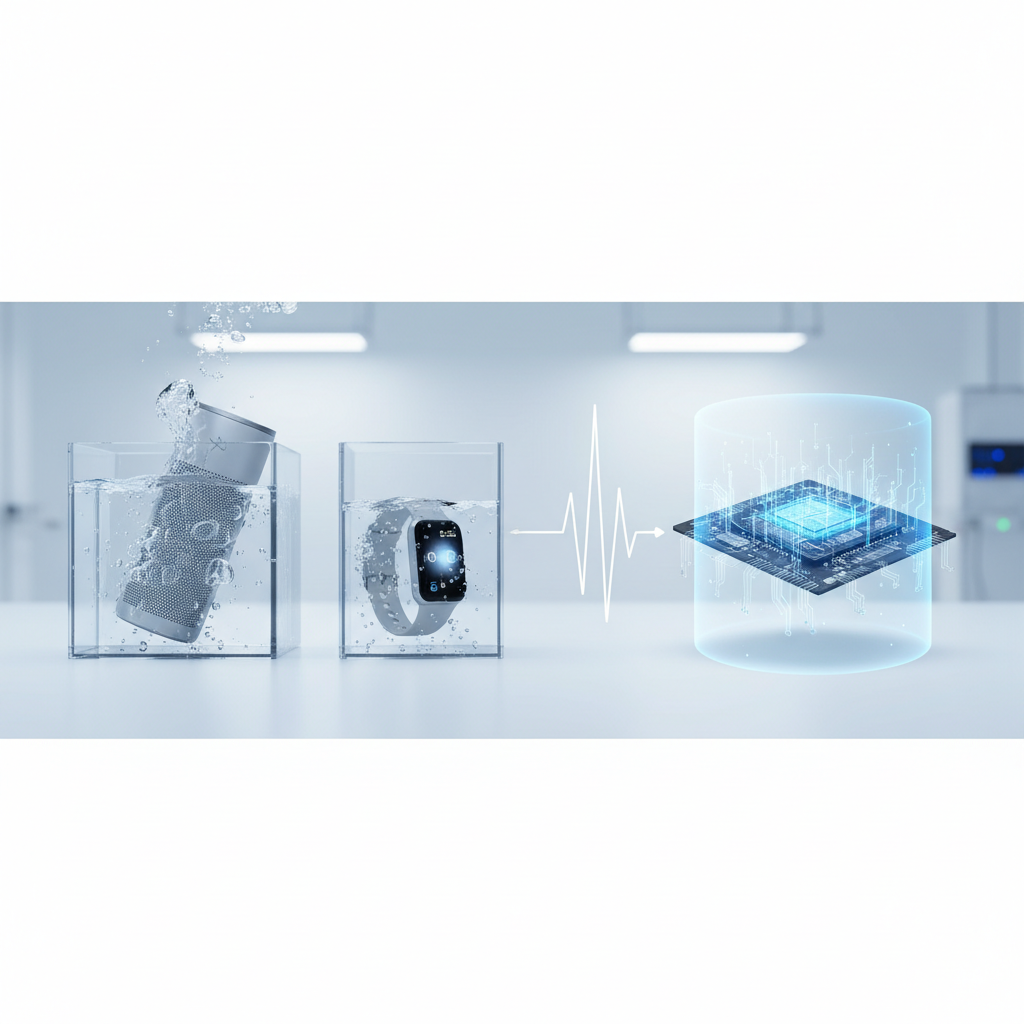
a device can be fully submerged in water up to 1 meter deep up to 30 minutes without sustaining damage. This rating is part of the IEC 60529 standard and applies to consumer electronics, audio gear, and wearables. It offers protection for splashes, rain, and brief submersion, but it is not designed for deep-water or high-pressure use.
Key Takeaways
- IPX7 devices can withstand submersion in up to 1 meter of fresh water for 30 minutes
- The “X” means no dust ingress rating has been assigned
- IPX7 is not the same as waterproof in all conditions, especially saltwater or high pressure
- It is a reliable rating for poolside use, rain, and accidental drops in water
- Higher ratings like IPX8 offer deeper or longer submersion protection
- IPX7 is one of the most common ratings found on portable Bluetooth speakers and earbuds
Understanding the IP Rating System
What Do the Numbers Mean?
The IP rating consists of two characters after the letters “IP.” The first digit (0-6) rates protection against solid particles like dust. The second digit (0-9) rates protection against liquids. When a digit is replaced by “X,” it simply means that aspect was not tested or rated.
Here is a quick breakdown of water protection levels:
| Rating | Protection Level |
|---|---|
| IPX4 | Splash resistant from any direction |
| IPX5 | Protected against low-pressure water jets |
| IPX6 | Protected against high-pressure water jets |
| IPX7 | Submersion up to 1 meter for 30 minutes |
| IPX8 | Submersion beyond 1 meter (manufacturer specified) |
Why the “X” in IPX7 Matters
Many consumers assume IPX7 means the device is fully sealed against everything. It does not. The “X” in dust rating position means the product was simply not tested for dust resistance. That not mean it will fail in dusty conditions, but it is not guaranteed to perform well in them either. If dust protection matters to you, look for ratings like IP67, which includes both dust and water resistance.
WhatX7 Protects Against
IPX7 is well-suited for everyday exposure to water. Specifically, it covers:
- Rain and splashing from any direction
- **Brief pool, sink, or puddle
- Accidental drops into shallow water
- Sweat and humidity during workouts
It is a practical rating for beach trips, outdoor activities, and gym use. Many of the best outdoor adventures carry this rating precisely because it handles real-world conditions well.
What Protect Against
This is where many buyers get confused. IPX7 has clear limitations:
- Saltwater exposure: Salt accelerates corrosion and is not of the IPX7 test. Rinse your device with fresh water after ocean use.
- High-pressure water: Pressure washing or strong jets can force water past seals even on IPX7 devices.
- Deep water: Anything beyond 1 meter is outside the rated spec.
- Extended submersion: The 30-minute window is a lab standard invitation to leave your speaker at the bottom of the pool.
Understanding these limits helps you use your gear safely and extend its lifespan.X7 vs. IPX8: What’s the Difference?
IPX8 offers a higher level of water protection than IPX7. While IPX7 is tested at 1 meter for 30 minutes, IPX8 devices are tested at depths greater than 1 meter, with the exact specifications set by the manufacturer. If you plan to use a device while swimming laps or in deeper water, IPX8 is the more appropriate choice.
That said, IPX7 is sufficient for the vast majority of everyday use cases. Most people do not need IPX8 unless specifically using gear in underwater environments.
How Applies to Audio Gear
For portable speakers and headphones, IPX7 is considered a solid standard. It means you can use your speaker at the beach, by the pool, or in the shower without worrying about rain or splashes. If you’re exploring to look for in a tailgating speaker, water resistance is one of the key factors, and IPX7 is usually sufficient for outdoor events.
Similarly, if you’re comparing earbuds vs. in-ear monitors for active use, checking the IPX rating is just as important as evaluating sound quality or fit. Sweat and rain are real threats to unprotected earbuds.
When shopping for over-ear headphones, water resistance ratings are less common but still worth checking if you plan to use them outdoors or during exercise.
Conclusion
The IPX7 rating is a reliable well-defined standard that offers strong protection against water submersion in everyday conditions. It is not a guarantee against all water damage, but it provides meaningful peace of mind for outdoor use, workouts, and accidental exposure. Knowing IPX7 covers and where its limits are helps you choose the right gear and use it confidently.
FAQs
Can I swim with an IPX7 device?
IPX7 devices can handle brief submersion up to 1 meter for 30 minutes, but they are not designed for active swimming. Movement and pressure changes in water can exceed the conditions of the standard test.
Does IPX7 protect against saltwater?
No. The IPX7 standard uses fresh water for testing. Saltwater can corrode seals and internal components, so always rinse IPX7 devices with fresh water after ocean exposure.
Is IPX7 the same as waterproof?
Not exactly. IPX7 means the device is water-resistant under specific conditions. True waterproofing implies protection under all water conditions, which no consumer rating fully guarantees.
How is IPX7 different from IP67?
IP67 includes both a dust resistance rating (6, meaning fully dust-tight) and the same water protection as IPX7. The “X” in IPX7 simply means dust resistance was not tested.
Does IPX7 wear out over time?
Yes. The seals and gaskets that provide water resistance can degrade with age, drops, and regular use. An older IPX7 device may not perform as well as it did when new.