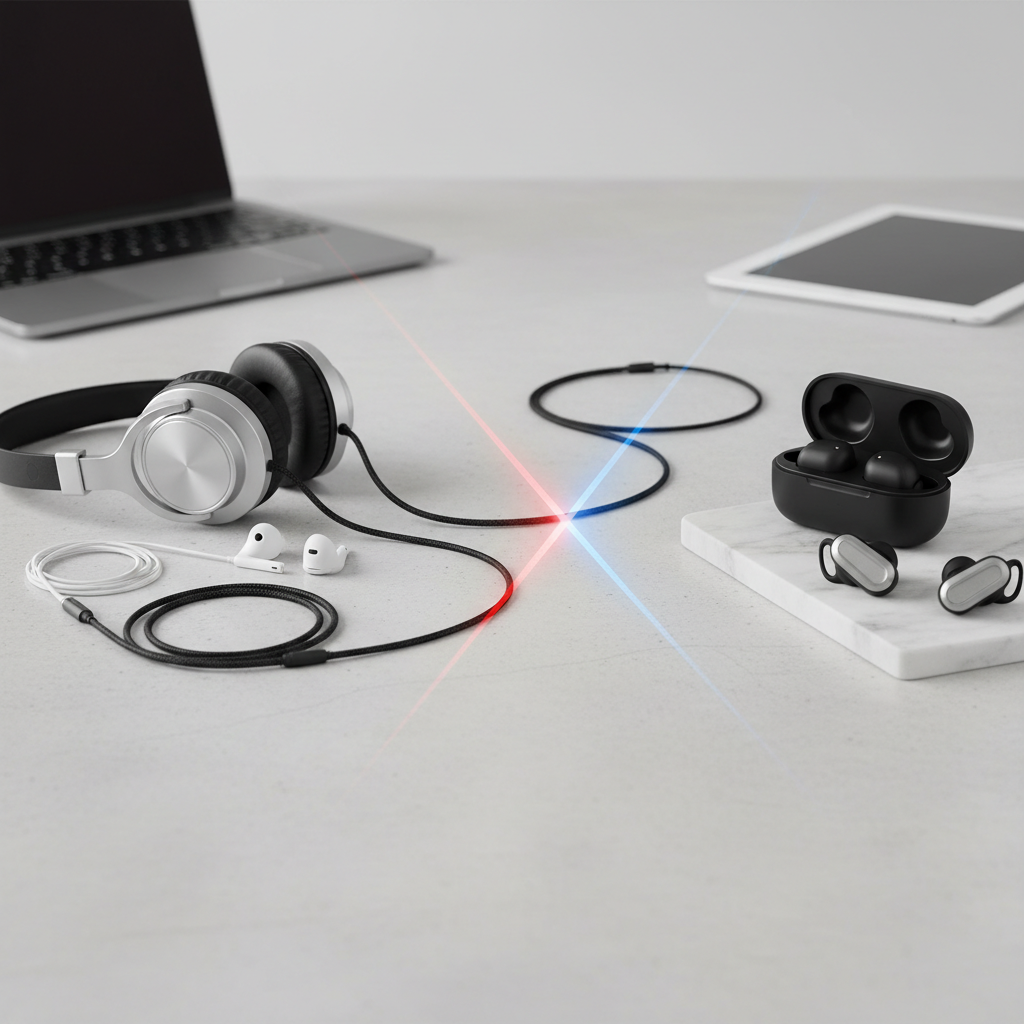
Choosing between wired and wireless earbuds is one of the most common decisions audio shoppers face today. Both options have real strengths, and the right choice depends almost entirely on how and where you plan to use them.
This guide breaks down the key differences between wired and wireless earbuds so you can make a confident, informed decision without wading through unnecessary noise.
Quick Answer
Wired earbuds offer more reliable audio quality and never need charging, making them ideal for audiophiles and studio use. Wireless earbuds provide freedom of movement and convenience for everyday use, commuting, and workouts. For most casual listeners, wireless is the better everyday choice. For critical listening or professional use, wired often wins.
Key Takeaways
- Wired earbuds deliver consistent, uncompressed audio with zero latency and no battery required
- Wireless earbuds offer convenience, portability, and freedom of movement
- Sound quality differences between the two are narrowing, but wired still has the edge for critical listening
- Wireless earbuds require regular charging, which adds a layer of maintenance
- Wired earbuds are generally more affordable at the same quality tier
- Your use case, whether commuting, working out, gaming, or studio monitoring, should drive your decision
What Are the Main Differences Between Wired and Wireless Earbuds?
The core difference comes down to how audio is transmitted. Wired earbuds use a physical cable to carry an analog or digital audio signal directly from your device. Wireless earbuds use Bluetooth to transmit audio over a short-range radio frequency.
This distinction affects sound quality, latency, battery life, convenience, and price in ways that matter differently depending on what you need.
Sound Quality: Does the Connection Type Matter?
Wired earbuds have a natural advantage in audio fidelity. Because the signal travels through a cable, there is no compression or encoding involved. You hear exactly what the source sends.
Wireless earbuds rely on Bluetooth codecs like AAC, aptX, or LDAC to compress and transmit audio. Modern codecs have improved significantly, and many listeners cannot distinguish the difference in everyday listening. However, for audiophiles or anyone doing critical listening, wired still provides a measurable edge.
If you are exploring higher-end wired options, this guide to best over-ear headphones under $200 offers helpful context on what to prioritize in quality audio gear.
Latency: Which Has Less Delay?
Wired earbuds have virtually zero latency. The signal is immediate, which makes them the preferred choice for gaming, video editing, or any scenario where audio sync matters.
Wireless earbuds introduce a small delay due to Bluetooth transmission. Most modern earbuds with aptX Low Latency or similar codecs reduce this to imperceptible levels for casual use, but it can still be noticeable during gaming or video playback on older devices.
Convenience and Portability
This is where wireless earbuds clearly win. Without a cable, you have full freedom of movement, no tangling, and easy pairing with multiple devices.
Wired earbuds, while reliable, come with cable management challenges. They can snag, tangle, and limit movement, which makes them less practical for workouts or commutes.
Battery Life and Charging
Wireless earbuds require regular charging. Most offer between 5 and 10 hours of playback per charge, with additional charges available from the case. Forgetting to charge means no music.
Wired earbuds have no battery at all. Plug them in and they work, every time, without any power management involved.
Durability and Longevity
Wired earbuds tend to last longer in terms of core function. There are no batteries to degrade over time, and no wireless components that can fail or become obsolete as Bluetooth standards evolve.
Wireless earbuds have lithium-ion batteries that lose capacity over years of use. After two to three years, battery life may noticeably decrease, which can shorten the practical lifespan of the product.
Wired vs Wireless Earbuds: Side-by-Side Comparison
| Feature | Wired Earbuds | Wireless Earbuds |
|---|---|---|
| Sound Quality | Higher fidelity, no compression | Very good, codec-dependent |
| Latency | Near zero | Low to moderate |
| Battery Required | No | Yes |
| Convenience | Limited by cable | High freedom of movement |
| Price (same quality tier) | Generally lower | Generally higher |
| Durability | Long-lasting | Battery degrades over time |
| Best For | Critical listening, studio, gaming | Commuting, workouts, everyday use |
Who Should Choose Wired Earbuds?
Wired earbuds are the better choice if you:
- Prioritize audio accuracy over convenience
- Use earbuds for gaming, recording, or video production
- Want a budget-friendly option without sacrificing sound quality
- Prefer not to manage charging schedules
It is also worth understanding the distinction between standard earbuds and in-ear monitors, which are typically wired. This breakdown of earbuds vs. in-ear monitors explains the key differences clearly.
Who Should Choose Wireless Earbuds?
Wireless earbuds are the better choice if you:
- Commute, travel, or exercise regularly
- Want seamless pairing with phones, tablets, and laptops
- Prefer a cable-free experience for daily listening
- Value features like active noise cancellation or transparency mode
If you are shopping for wireless earbuds and have smaller ears, fit matters as much as sound quality. The guide to best Bluetooth earbuds for small ears covers what to look for in terms of comfort and secure fit.
Does Price Play a Role?
At the same quality tier, wired earbuds are typically more affordable because manufacturers are not building in Bluetooth hardware, batteries, or charging cases. A $50 wired earbud often competes with a $100 wireless model in pure audio performance.
That said, wireless earbuds have come down significantly in price, and there are strong options at nearly every budget level.
Conclusion
Wired and wireless earbuds each serve different needs well. Wired earbuds remain the gold standard for audio accuracy, low latency, and long-term reliability. Wireless earbuds offer a level of everyday convenience that is hard to match. For most people, wireless is the practical daily driver. For focused listening or professional use, wired is still worth considering.
Understanding what matters most in your listening habits is the clearest path to the right decision.
Frequently Asked Questions
Are wireless earbuds as good as wired for sound quality?
Modern wireless earbuds using advanced codecs like LDAC or aptX HD come very close to wired quality for casual listening. However, wired earbuds still have a measurable advantage for critical or professional audio use.
Do wired earbuds work with all devices?
Most wired earbuds use a 3.5mm headphone jack, which is not present on many newer smartphones. You may USB-C or Lightning adapter depending on your device.
Can wireless earbuds cause audio lag during gaming?
Standard Bluetooth can introduce noticeable lag during gaming. Earbuds with low-latency codecs or gaming-specific modes significantly reduce this delay, but wired remains the most reliable option for lag-free gaming audio.
How long do wireless earbuds typically last before the battery degrades?
Most wireless earbuds maintain strong battery performance for one to three years with regular use. After that, battery capacity often declines, reducing playback time between charges.
Are wired earbuds better for working out?
Wireless earbuds are generally more practical for workouts due to the absence of cables. However, wired earbuds with secure-fit designs can work well if you prefer not to manage charging.