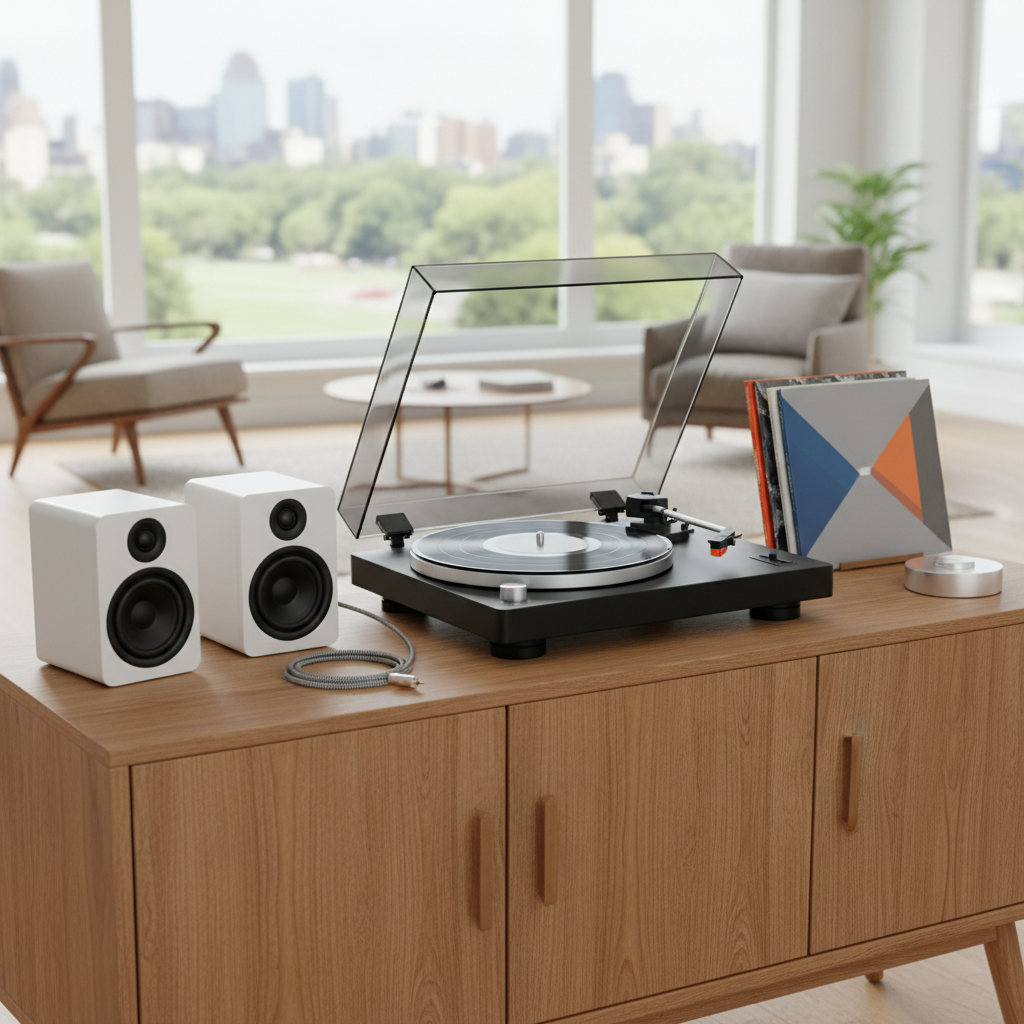
Vinyl records have made a remarkable comeback over the past decade, and with resurgence comes a wave of new listeners looking to get started. If you’ve been curious about spinning records but aren’t sure where to begin, understanding what makes a good entry level turntable is the right first step. This guide breaks down everything a first-time buyer needs to know, from key components to realistic expectations, so you can make a confident, informed decision.
Key Takeaways
- Entry level turntables typically range from $100 to $300 and offer a solid to vinyl playback
- A built-in phono preamp is a helpful feature for beginners since it simplifies setup
- Belt-drive turntables are generally quieter and better suited for home listening; direct-drive models offer more precision
- The cartridge and stylus are critical components that directly affect sound quality
- Avoid ultra-cheap turntables (under $80) as they can damage your records
- You don’t need expensive to enjoy vinyl, but speaker quality does matter
- Upgrading components of the vinyl hobby and keeps costs manageable
What Is an Entry Level Turntable?
An entry level turntable is a record player designed for beginners who want to experience vinyl without committing to audiophile-grade equipment. These turntables sit in the accessible price range, typically between $100 and $300, and are built to deliver genuine analog sound without overwhelming complexity.
The term “entry level” doesn’t mean poor quality. Many turntables in this category outperform the suitcase-style record players you might find at big box stores, which are often sold on aesthetics rather than audio performance. A proper entry level deck will have a decent tonearm, a replaceable stylus, and enough build quality to protect your records from unnecessary wear.
Belt-Drive vs. Direct-Drive: Which Should You Choose?
One of the first decisions you’ll face is choosing between a belt-drive and direct-drive turntable. Both work well for beginners, but they have different strengths.
Belt-Drive Turntables
In a belt-drive design, a rubber belt connects the motor to the platter. This isolates motor vibration from the platter, which results in a quieter noise floor and cleaner sound. Most entry level audiophile turntables use belt-drive mechanisms for this reason. The tradeoff is that belts wear out over time and need occasional replacement, though this is an inexpensive fix.
Direct-Drive Turntables
Direct-drive turntables connect the motor directly to the platter, which gives them faster startup speeds and more consistent platter rotation. These are the preferred choice for DJs who need to scratch and manipulate records. For casual home listening, direct-drive is perfectly capable, though motor noise can sometimes be a concern at the entry level price point.
| Feature | Belt-Drive | Direct-Drive |
|---|---|---|
| Motor Noise | Lower | Slightly higher |
| Startup Speed | Slower | Faster |
| Best For | Home listening | DJing, precision use |
| Maintenance | Belt replacement | Minimal |
| Price Range (Entry) | $100 to $300 | $150 to $400 |
The Phono Preamp: Built-In or Separate?
A phono preamp (also called a phono stage) amplifies the signal from your turntable’s cartridge to a level that your speakers or receiver can use. Without one, you’ll get almost no sound at all.
Many entry level turntables include a built-in phono preamp, which makes setup much simpler. You can plug the turntable directly into powered speakers or a standard receiver needing an extra component. This is a major convenience for beginners.
Some turntables give you the option to bypass the built-in preamp and connect to a dedicated external unit instead. As your system grows, a standalone phono preamp can improve sound quality noticeably, but for getting started, built-in is perfectly fine.
If you out a more complete setup, it’s worth reading about [best headphone amps and how to choose thediecastaudio.com/best-headphone-amps-how-to-choose-the-right-one/) to understand how amplification choices affect your listening experience more broadly. The same that apply to headphone amplification, matching gain, impedance, and signal quality, carry over to phono stages as well.
Understanding Cartridges and Styli
The cartridge is the small component at the end of the tonearm that reads the grooves in your records. Inside it sits the stylus, the tiny needle that actually makes contact with the vinyl. This is one turntable because it directly affects both sound quality and record preservation.
Moving Magnet vs. Moving Coil
Most entry level turntables use moving magnet (MM) cartridges, which are more affordable, easier to replace, and compatible with standard phono preamps. Moving coil (MC) cartridges offer higher performance but require a more specialized preamp and are generally not found at the entry level.
Stylus Shape Matters
- Conical (spherical) stylus: The most common shape on budget turntables. Makes broader contact with the groove, which is durable but slightly less accurate
- Elliptical stylus: More precise tracing, better detail retrieval, and less record wear. Found on better entry level and mid-range decks
- Shib line contact: High-end stylus profiles, rarely seen at the entry level
A replaceable stylus is a must-have feature. Over time, styli wear out and a worn needle can damage your check that replacement styli are available and affordable any turntable you’re considering. Understanding how speakers reproduce the full frequency range your stylus captures is also useful, and learning what tweeters do in an audio system helpful context for how high-frequency detail flows through your entire setup.
What to Look for in an Entry Level Turntable
Here are the core prioritizing when evaluating your first turntable:
- Anti-skate: Helps keep the stylus tracking properly in the groove
- Adjustable tracking force: Lets you set the correct downforce for your cartridge, protecting your records
- Removable headshell or cartridge: Makes upgrades easier down the road
- Speed options: Most records are 33 albums) or 45 RPM (singles). Some are 78 RPM, though that’s less common
- Dust cover: Protects the platter and stylus when not in use
- Solid platter: Heavier platters reduce speed fluctuations (wow and flutter)
Common Mistakes First-Time Buyers Make
Getting into vinyl is exciting, but a few missteps can lead to frustration or damaged records. Here are the most common pitfalls to avoid:
- Buying a suitcase-style player: These all-in-one units look charming but often use cheap ceramic cartridges with excessive tracking force that grinds grooves down over time
- Ignoring the stylus condition: A worn or damaged stylus is the fastest way to ruin a record collection
- Skipping the preamp check: Make sure you know whether your turntable has a built-in preamp before buying speakers or a receiver
- Underestimating speaker quality: Even sound mediocre through poor speakers. Powered bookshelf speakers are a popular and affordable pairing for vinyl setups. The Edifier R1280T is a well-regarded option in this space
- Not leveling the turntable: An unlevel surface can cause tracking issues and uneven stylus wear
- Overlooking speaker output options: If your powered speakers don’t have enough bass presence, you might find yourself wondering whether a soundbar needs a subwoofer or whether a dedicated subwoofer would round out your vinyl listening experience
Turntable Specs That Actually Matter
Many spec sheets are filled with numbers that don’t mean much to a new buyer. Here’s a quick reference for the ones worth paying attention to:
| Specification | What It Means | Good Range (Entry Level) |
|---|---|---|
| Wow and Flutter | Speed consistency; lower is better | Below 0.25% |
| Signal-to-Noise Ratio | Background noise level; higher is better | Above 60 dB |
| Channel Separation | Left/right audio isolation | Above 20 dB |
| Tracking Force Range | Stylus pressure on record | 1.5 to 3.0 grams typical |
| Speed Accuracy | How close to exact RPM | Within 0.5% |
Building Your First Vinyl Setup
A turntable doesn’t work in isolation. Here’s a simple chain for a beginner vinyl setup:
- Turntable (with built-in phono preamp)
- Powered bookshelf speakers (with their own amplification built in)
- RCA cables to connect them
This setup keeps things simple and affordable. As your interest grows, you can add a dedicated amplifier, upgrade your cartridge, or invest in a better phono stage.
One thing to keep in mind is that your listening environment matters too. Room acoustics, speaker placement, and even the surface your turntable sits on all affect the sound. Vibrations from the floor or nearby speakers can cause feedback through the stylus, so placing your turntable on a stable, isolated surface is worth the effort. you’re thinking about how to get the most out of your speakers in a room, understanding whether speakers improve with use over time can also help set expectations for how your system will develop.
Some listeners also enjoy pairing their turntable setup with a quality pair of headphones for late-night listening sessions. If you’re exploring that route, checking out a guide to the best over $200 can help you find aements your vinyl setup without breaking the budget. For listeners who prefer more portable or compact, understanding the difference between earbuds and in-ear monitors is a useful starting point before committing to a headphone style.
Another consideration as your setup grows is wireless connectivity. Some listeners want the flexibility to stream music when they’re not spinning records. Knowing how Bluetooth transmitters work and how to one can help you bridge your analog turntable with wireless speakers or headphones if that flexibility matters to you.
Conclusion
Getting into vinyl with an entry level turntable is one of the most rewarding ways to engage with music. The format rewards patience and attention, and the listening experience feels distinctly different from streaming. The key is to avoid the cheap players that can damage your records, prioritize a few essential features like a replaceable stylus and adjustable tracking force, and pair your turntable with decent speakers.
You don’t need to spend a fortune to enjoy vinyl properly. A thoughtful setup in the $150 to $300 range for the turntable, combined with quality powered speakers, will give you a genuinely satisfying listening experience. Start there, learn the basics, and let your system grow naturally as your collection does.
Frequently Asked Questions
What is a good budget for a first turntable?
Most audio enthusiasts recommend spending at least $150 to $200 on your first turntable. This range gets you past the ultra-cheap players that can damage records and into decks with proper tonearms and replaceable cartridges.
Can I a Bluetooth speaker?
Some modern turntables include Bluetooth output, which lets you connect wirelessly to compatible speakers. However, this adds a conversion step that can affect audio quality, so wired connections to powered speakers generally sound better.
Do entry level turntables damage records?
A properly set up entry level turntable with a good stylus and correct tracking force will not damage records. The risk comes from cheap suitcase-style players with ceramic cartridges and excessive tracking weight.
How often do I need to replace the stylus?
A standard stylus lasts approximately 500 to 1,000 of playback. If you listen to records regularly, plan on replacing it every one to two years to protect your vinyl.
Do I need a receiver or amplifier with a turntable?
Not necessarily. If your turntable has a built-in phono preamp and you use powered (active) bookshelf speakers, you can skip a separate receiver entirely. This is the simplest and most cost-effective setup for beginners.